Atlas Truck Digital Twin - Axle Monitoring

OEE METRICS

Availability: 94.2%
Performance: 96.8%
Quality: 99.3%
Overall OEE: 90.5%

cad

Overall Equipment Effectiveness (OEE) is a vital manufacturing metric, used by automakers to certify suppliers against Automotive Industry Action Group (AIAG) and ISO/TS 16949 or IATF 16949 standards.

To compete globally, Shanthi Gears aimed to improve its OEE through enhanced productivity and process control.

Heading

They achieved this by leveraging a Digital Thread framework and Digital Twins to integrate data flow, creating a central repository for OEE data.

This enabled the application of machine learning algorithms to identify trends and anomalies, with insights visualized via dashboards for organizational improvement.

Heading

Maintaining an OEE above 80% now provides Shanthi Gears with:

  • Reduced downtime via predictive maintenance.
  • Improved product quality through process optimization.
  • Faster problem resolution.Enhanced data-driven decision-making.
  • A significant competitive advantage by providing complete part data to customers throughout contract lifecycles

cloud

Brands are increasingly choosing to bypass agencies by bringing ad operations and technology in-house, either by building internal AdOps teams, utilizing external AdTech, or other proprietary solutions.

Additional risks include the impending deprecation of third-party cookies (projected to cost publishers $10 billion, Google estimates 50-70% loss of ad revenue) and client concerns over opaque bidding practices, where middlemen obscure true ad inventory costs.

trouble across the advertising landscape

Data analytics doesn’t just report what happened; it figures out why it happened, what will happen next, and what the optimal strategic move is.

Cookie deprecation is an eventual certainty due to increased FTC and EU scrutiny. 

Crucially, cost transparency is a major leverage point, with 74% of marketers willing to increase ad spending by up to 50% for clearer data (Metamarkets Research).

trouble across the advertising landscape

In response, we developed a Demand-Side Platform (DSP) with AWS and Snowflake offering brands a transparent, all-in-one control point. We also implemented proprietary bidding algorithms, emphasized first-party data, improved brand relationships, and enhanced data security with blockchain.

Within one year, average Return on Ad Spend (ROAS) increased from 2 to 3.5, and client satisfaction significantly improved.

am

The 2020 Global Pandemic caused significant supply chain disruptions, increasing costs and delays for a family-owned aerospace manufacturer.

This negatively impacted sales staff morale due to concerns about meeting delivery commitments, further compounded by rising energy and labor costs that hindered competitive pricing and response times.

Heading

Initially, outsourcing addressed critical parts shortages. This led to exploring Additive Manufacturing (AM) and 3D printing as a permanent in-house solution. AM is already utilized in aerospace for components like engine parts, satellites, and aircraft structures.

Integrating AM with existing machining, molding, and casting capabilities enabled in-house production of prototypes, tooling, fixtures, jigs, and spare parts, reducing downtime.

PwC predicts 70% of aerospace companies will adopt AM by 2035

AM

The company then evaluated investing in expanded in-house AM capabilities versus relying on external vendors.

Thorough financial analysis (Cost-Benefit, TCO, Break-Even, IRR) resulted in a stakeholder-approved vision and roadmap. This allowed for assessing the flexibility of in-house manufacturing versus vendor relationships in adapting to market changes. 

Ultimately, the AM department became a standalone operation, achieving positive ROI within 18 months

Mortgage Mob Design System
Move mouse to control pan • Auto-scrolls when idle

pm

A real estate application, co-created by industry professionals and AI engineers approached us to help develop a go-to-market strategy.

Market research highlighted the transformative potential of AI in mortgages, predicting a reduction in closing times from 45 days to to 10 days by 2027 (Grand View Research) and AI involvement in 30% of underwriting decisions by 2030 (McKinsey)

Heading

Our contribution included a style guide with responsive design patterns, layout grids, and component placement guidelines, facilitating a cohesive and efficient design process. 

This modular library of interface elements allowed for rapid prototyping, usability testing, and stakeholder reviews.

The style guide also enabled A/B testing to assess market segment responses,supporting our recommendation to target both institutional and consumer users.

Heading

The product's core value proposition was Generative AI, capable of rapid data analysis, pattern identification, and improved decision-making. This technology streamlines mortgage applications, processes and verifies loan documents, automates underwriting, and forecasts credit risk and loan performance. 

Not to expand the user experience to highlight these capabilities was to leave a lot of potential money on the table.

Within eight months of the front-end makeover, the company entered acquisition discussions, validating the revised strategy and efforts.

ar

To appeal to a younger demographic and ensure long-term impact, the client sought our expertise in platform and creative strategy.

We identified TikTok as a key platform due to its emerging fashion influencer culture, which prioritizes authenticity and individuality over curated aesthetics, fostering independent commentary akin to early fashion blogging.

Heading

Our research also highlighted Augmented Reality (AR) as a powerful tool. AR viewing of 3D models boosts e-commerce conversion by up to 250%, and TikTok's Effect House platform supports custom AR effects.

Again, authenticity, as seen in campaigns that celebrate eccentricity and challenge conventional fashion norms, actually defined by an audience consensus of acceptable individuality, was crucial for brand resonance with consumers seeking genuine representation.

Heading

Brand lift studies measured campaign effectiveness:

  • Brand Perception: Positive sentiment rose from 60% to 75%, and trustworthiness increased from 3.5 to 4.2 (on a 5-point scale).
  • Engagement: Ads garnered 150,000 clicks (2.5% CTR), and social posts received 10,000 shares and 5,000 comments.
  • Cost Efficiency: CPA dropped from \25 to \15, and ROAS was 5:1

bi

Columbite-tantalite (coltan), a critical mineral for smartphones and laptops, is largely sourced from the Democratic Republic of Congo (DRC), where its mining is linked to human rights abuses, environmental damage, and conflict financing.

To combat conflict minerals and comply with international restrictions, Tongliao Resources needed to verify the origin of its coltan extractions.

Heading

Laser-Induced Breakdown Spectroscopy (LIBS) is an analytical technique that uses a laser to excite a small amount of material, the emitted light is then analyzed to determine the elemental composition of the sample and pinpoint the origin and provenance. 

Handheld LIBS analyzers were reliably sourced. These compact, user-friendly devices were suitable for field applications among a diverse, widespread workforce across the region.

BI

Recognizing the social aspect of technology adoption, peer-to-peer learning, mentoring, and responsiveness to employee feedback was emphasized.

This approach led to a 98% adoption rate within two years, achieving full Dodd-Frank and EU compliance.

Who is this guy?

Let's Find Out!

A Brief Preface on Housing

Between 1949 and 1966 Joseph Eichler built more than 11,000 homes in Northern California.

"Eichlers" feature glass walls, flat or low-sloping A-framed roofs, Spartan facades with clean geometric lines, and open floor plans in a style indebted to Frank Lloyd Wright and Ludwig Mies Van der Rohe.

Dave Manning grew up in a succession of Eichlers, from preschool through High School graduation, from Palo Alto down to Cupertino; just a working-class kid in the tidy world of Bauhaus-inspired, suburban California tract homes

And he began working at 12, delivering the Cupertino Courier with his cherished treasure, a flame-orange metal-flake Schwinn Stingray

…then went on to such jobs as
apricot picker,
construction worker,
bike messenger,
night watchman,
waiter, and
door-to-door salesman;

He counted inventory for F.A.O. Schwarz,
passed out flyers for Wilkes Bashford,
and stocked K-Mart and Macy's shelves

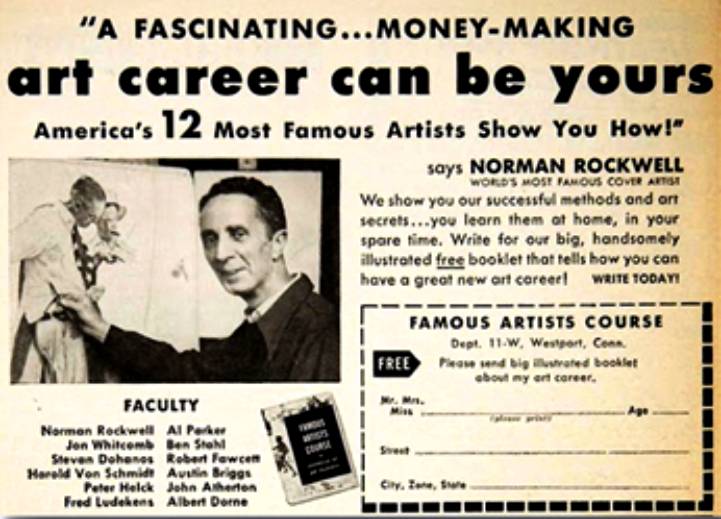
His interest in cartooning led him to enroll in the Famous Artists correspondence school with courses designed by Norman Rockwell, Dong Kingman, and Bernard Fuchs, among others.

By 16, he sold a few pages to the popular underground comix of the day, appearing alongside masters — Robert Williams, Victor Muscoso, and Art Spiegelman.

But while Dave enjoyed seeing his work in print, most editors were less enthused; He never achieved what we refer to nowadays as Product/Market Fit.
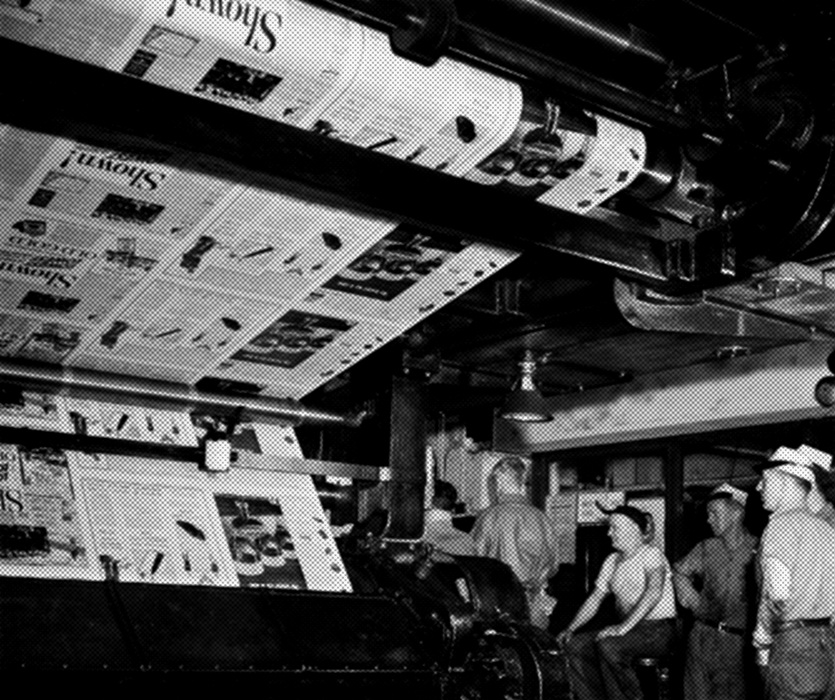
Drawn to the operational side of the printing game Dave liked hanging out with the pressmen and other technicians first at the Courier, then the San Jose Mercury and San Mateo Times

He taught himself mechanical prep, layout, film-stripping, plate making, and operating the mighty, now extinct Stat Camera.

Struck by the creativity throughout the working world, he came to see every person, bound by social circumstances but free in their thinking, as the origin of all enterprise

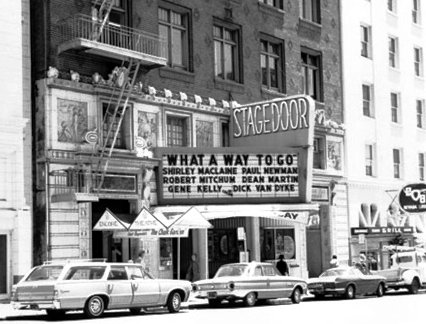
Later, with a couple of partners, Dave founded and ran a design/advertising agency located in the historic Native Sons of the Golden West building at Mason and Geary in downtown San Francisco.

With clients including:
Harcourt Brace Jovanovich, Young & Rubicam, IBM,
Chevron Chemical,
University of San Francisco, and Peppermill Casino


Dave mastered workflows and priorities across a wide expanse of industries, and what it takes to deliver real results to diverse stakeholders.

During these years, he learned from legends:  Ed Thrasher, art director at Warner Records, advertising genius Hal Riney, and illustration greats Barbara Bradley, Howard Brodie, Charles Pyle, and Al Parker.

In 1983, Dave bought a second-hand Commodore 64 computer, followed by an IBM 5170 for business and an Apple II ci for personal projects.

The Digital Age, and its attendant Techno-Mania, had arrived.

Beyond technology and hardware, Dave was swept away by the deluge of learning and productivity tools available to so many for the first time in history. He plunged into this wealth of intellectual capital in a quest to create value and foster positive impacts.

Of course, he still loves the equipment, even rebuilding an old Silicon Graphics Indigo2...sort of.